Your policy decides, so read it or ask your agent. This is how two state insurance regulators describe the common case.
| What the tree hit | Usual answer | Said by |
|---|---|---|
| The house | Many homeowners policies provide some coverage when a storm drops a tree on it | Texas Department of Insurance |
| A garage or fence | Treated as damage to a structure; removal is covered with the claim | Oklahoma Insurance Department |
| Only the yard | Usually not covered | Texas Department of Insurance |
| Your driveway | Some policies pay to clear limbs that block it | Texas Department of Insurance |
| Your car | The auto policy, if you carry comprehensive coverage | Texas Department of Insurance |
When it was the neighbor’s tree
Texas’s regulator says the neighbor’s policy probably will not pay unless the neighbor was at fault, and that you can then claim on your own. Oklahoma’s adds the case where fault exists: a neighbor who was told the tree was a safety concern and did nothing could be considered negligent, and if your insurer recovers from them, you may get your deductible back. Trees on the property line
Two different limits
Many policies carry a small separate amount for removing tree debris. One insurer’s summary of its standard form puts it at $500 per tree and $1,000 per loss, payable when a tree felled by windstorm damages a covered structure or blocks a driveway or a ramp for a person with a disability. A tree-industry article in TCI Magazine argues that lifting a tree off a house is part of repairing the house and should not be capped by that debris amount. Ask your insurer which part of the policy pays for which step.
In what order
Photographs before anything moves, then the claim, then temporary protection with receipts kept, then removal. The Texas department lists photos first: before the tree is moved or repairs are made.
Checked against the sources below on 2026-10-11.
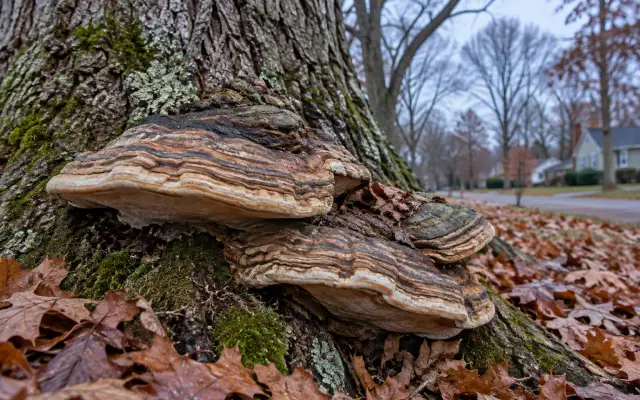 What are the warning signs a tree may fail?