The reasons arborists accept
The International Society of Arboriculture lists the cases in which it recommends getting an arborist to decide on removal:
| Reason | What it looks like |
|---|---|
| Dead, dying or an unacceptable risk | Bare crown, decay, a defect over a target |
| An obstruction pruning cannot correct | Trunk against a foundation, a tree in a driveway’s path |
| Crowding and harming better trees | A weak tree shading or rubbing a valuable one |
| Construction requires it | The footprint of an addition or a new driveway |
“It might fall someday” is not on the list by itself. Every tree can fail; the ISA’s point is that only a small share ever hit anything, and the question is how likely failure is and what lies underneath.
Questions to settle first
- What would it hit? A dead tree at the back of a large lot and the same tree over a bedroom are different decisions.
- Is the problem one limb or the whole tree? A single dead or cracked limb can come off without losing the tree. Pruning instead of removal
- Can it be supported? A weak fork over the house may be cabled. Cables and braces
- Do you need it in writing? In Florida, an arborist’s documented finding of unacceptable risk exempts a single-family homeowner from local removal permits. Permits and rules
If the answer is yes
Removal is quoted after someone sees the tree: height, condition, what is under it and access drive the price. What changes a quote
Checked against the sources below on 2026-10-11.
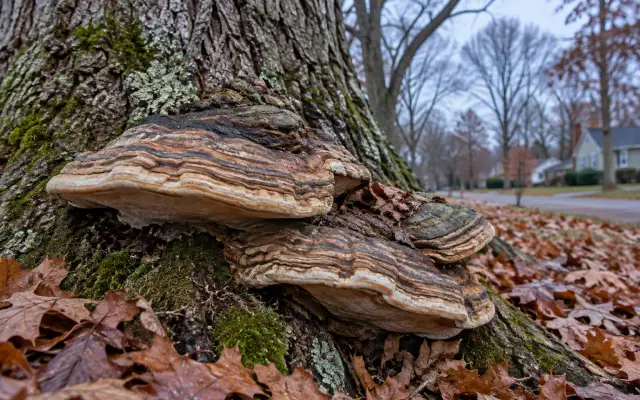 What are the warning signs a tree may fail?