How it works
A cable is strung high between two stems or limbs so they move together in wind instead of pulling apart at the fork. A brace is a rod through the wood, usually lower, at a weak union or across a crack. The International Society of Arboriculture lists the service as support for branches with weak attachments and describes the purpose as adding physical support to weak branches and stems to increase their strength and stability.
The same guidance ends with a limit: such supports are not guarantees against failure.
Good candidates and poor ones
| Usually a fit | Usually not |
|---|---|
| Two similar stems from one point, sound wood | Decay or cavities in the union |
| A long heavy limb worth keeping | A tree in decline |
| A valuable tree where pruning would take too much | A deep crack through the trunk |
Questions to settle
- What is the defect? An arborist should name it. Warning signs
- What would a failure hit? Support lowers the chance of a split; it does not make the area under the tree safe.
- Who checks the hardware later? Cables and the tree around them change as it grows. Ask how often the installer recommends inspection and write the date down.
If the wood is failing, removal of one stem or the tree is the safer choice. Should it come down?
Checked against the sources below on 2026-10-11.
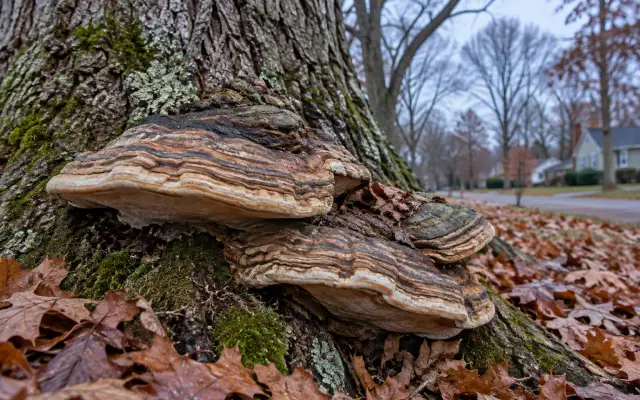 What are the warning signs a tree may fail?