The defects, in plain terms
The International Society of Arboriculture describes these as defects or signs of possible defects in urban trees:
| Sign | Why it matters |
|---|---|
| Dead branches in the crown | The most obvious hazard; risk depends on the branch’s size and what is under it |
| Cracks or splits running along the trunk or a large branch | Can mean the wood has started to fail |
| Two stems of similar size from one point | Often a failure point, sometimes called a split trunk |
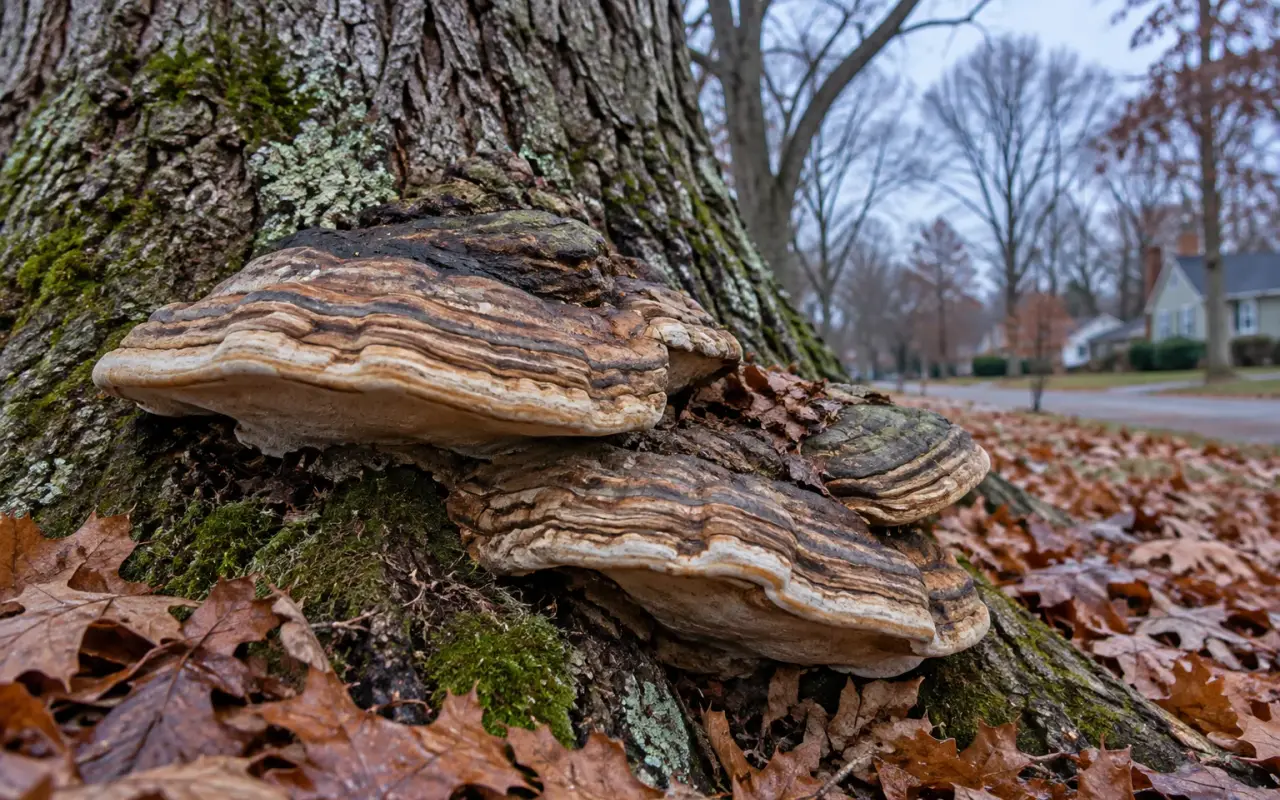
| Cavities, rotten wood, mushrooms or brackets | Visible signs of decay inside |
| Cracked or lifted soil at the base | Roots moving; a warning sign, more so if the tree leans |
| Branch weight concentrated at the ends | Long limbs with little taper break more easily |
| Wounds, root loss, grade changes | Often the result of construction or poor pruning |
Signs of decline
For the tree’s health, the ISA suggests watching for new leaf and bud growth, leaf size, twig growth and dieback at the top of the crown, at least once a year. A tree whose growth suddenly drops has changed, even if it still looks green.
The two that need a quick call
A new lean after rain or wind, and soil heaving on the side away from the lean, mean the roots have moved. A crack that appeared in a storm in a large stem over the house is the other. Keep people out from under the tree and have it looked at. Is it an emergency?
What an examination adds
The ISA advises that a tree showing any of these signs be examined by a certified arborist, who can judge how serious the defect is and whether pruning, support or removal fits. What an arborist’s assessment tells you
Checked against the sources below on 2026-10-11.