Before it falls
The International Society of Arboriculture puts responsibility with the owner: keeping others safe around trees on a property is the tree owner’s job. Insurance regulators describe what happens when that job is ignored. Oklahoma’s department says a neighbor who is notified that a tree is a safety concern and does nothing could be considered negligent.
So the practical steps are:
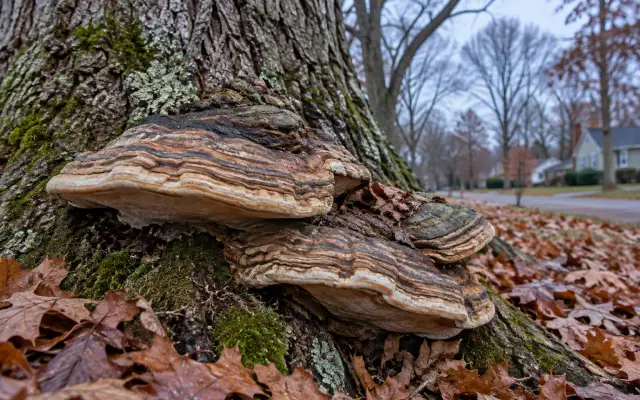
- Talk to the neighbor and point out what you see. Warning signs
- Follow up in writing, dated, naming the tree and what it hangs over.
- Keep photographs of the defect: dead limbs, a new lean, fungus at the base.
- If you want weight behind it, an arborist’s written assessment. Arborist assessment
What you may cut yourself, such as branches crossing the line, is a matter of state and local law, and it varies. This is not legal advice.
After it falls
Texas’s regulator explains the usual case: the neighbor’s homeowners policy probably will not pay for the damage and removal unless the neighbor was at fault, and you can file on your own policy. If your insurer recovers money from the neighbor, Oklahoma’s department notes you may get your deductible back. Photograph the stump and trunk on their side as well as the damage on yours.
Getting it off your property
A tree resting on your house or fence has to come off before repairs can start, whoever owned it. A crew can usually work from your side. Mention on the call whose tree it is; it does not change the work, but it matters for the paperwork. Who pays?
Checked against the sources below on 2026-10-11.
 What are the warning signs a tree may fail?